Repairing Sash Window Putty and Glass: A Cheshire Craftsman’s Guide
Nearly half of all homeowners, 48% according to industry research, identify maintenance or repair as the main reason for undertaking a window project. Repairing sash window putty and glass sits at the heart of that statistic, and it is one of the most common calls we receive from period property owners across Cheshire.
Key Takeaways
- Putty failure is gradual but predictable: cracking, shrinkage, and gaps develop over years, not overnight.
- Early intervention prevents costly repairs: a small crack left unaddressed lets moisture into the timber and can lead to rot.
- Original glass has value: Victorian and Edwardian glass often carries visible imperfections that are part of the property’s character, so preservation is usually preferable to replacement.
- Toughened glass is a safety upgrade: where original panes are beyond saving, toughened glass improves safety without altering appearance.
- Measurement matters: replacement panes are typically cut around one-sixteenth of an inch smaller than the opening to allow for a proper, secure fit.
- Draught-proofing first is the smart approach: before committing to full glazing work, draught-proofing often delivers the quickest comfort improvement for the lowest cost. Read more in our draught-proofing and insulation services.
- Professional restoration protects listed status: Grade II listed properties have specific compliance requirements that a specialist restorer will understand.
Understanding Why Sash Window Putty Fails Over Time
Sash windows bring timeless appeal to any property, but they need regular upkeep to maintain their beauty.
Putty is a linseed oil-based compound, and like any organic material, it hardens and contracts as it ages. Over several decades of Cheshire weather, that contraction produces the tell-tale cracks and gaps you see running along the edge of the glass.
Once those gaps appear, moisture finds its way behind the putty line and into the timber sash bars beneath. This is where a simple cosmetic issue becomes a structural one.
We cover this process in detail in our guide to common issues with sash windows, where identifying failure early is the first and most important step.
Repairing Sash Window Putty and Glass: A Step-by-Step Approach
Repairing sash window putty and glass follows a sequence that has changed very little in over a century of traditional joinery, and for good reason: it works.
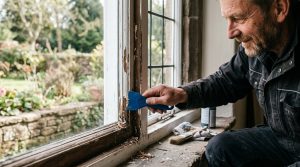
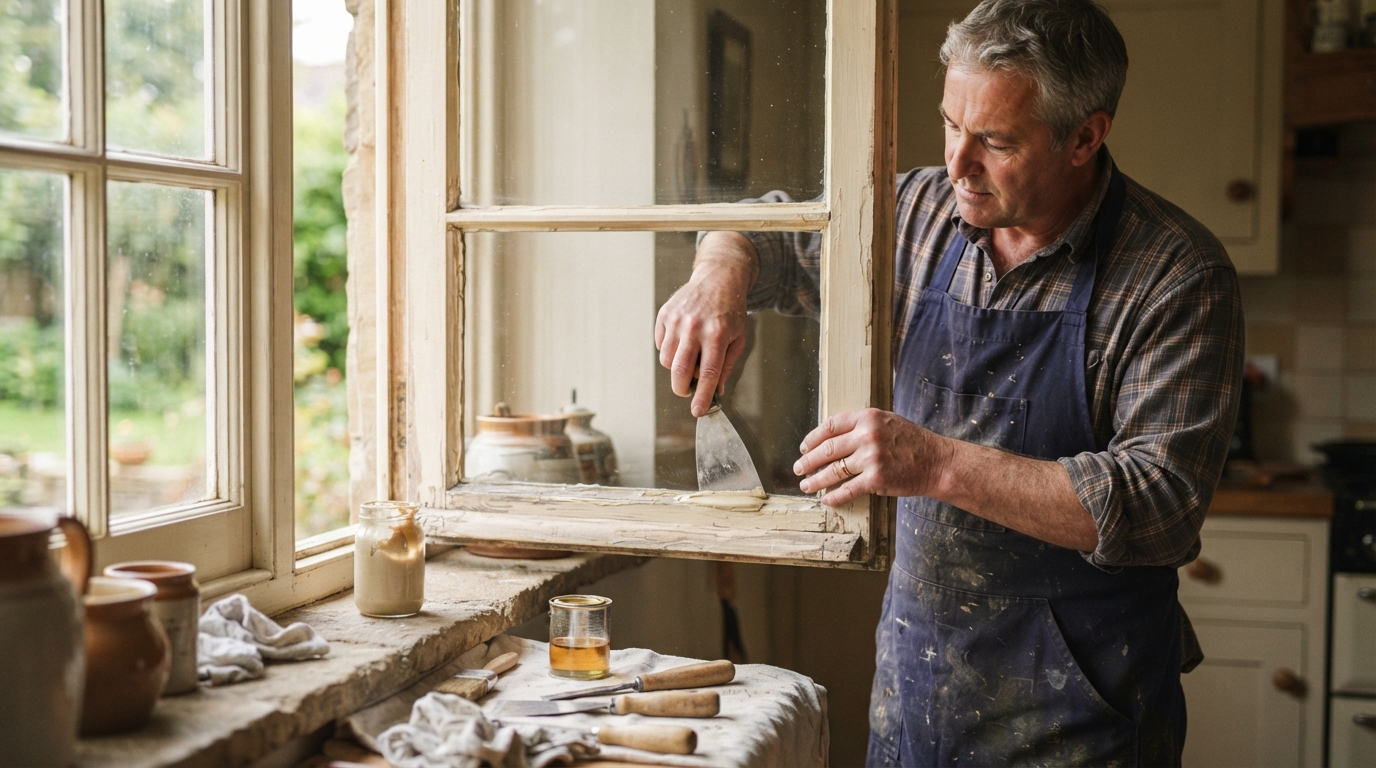
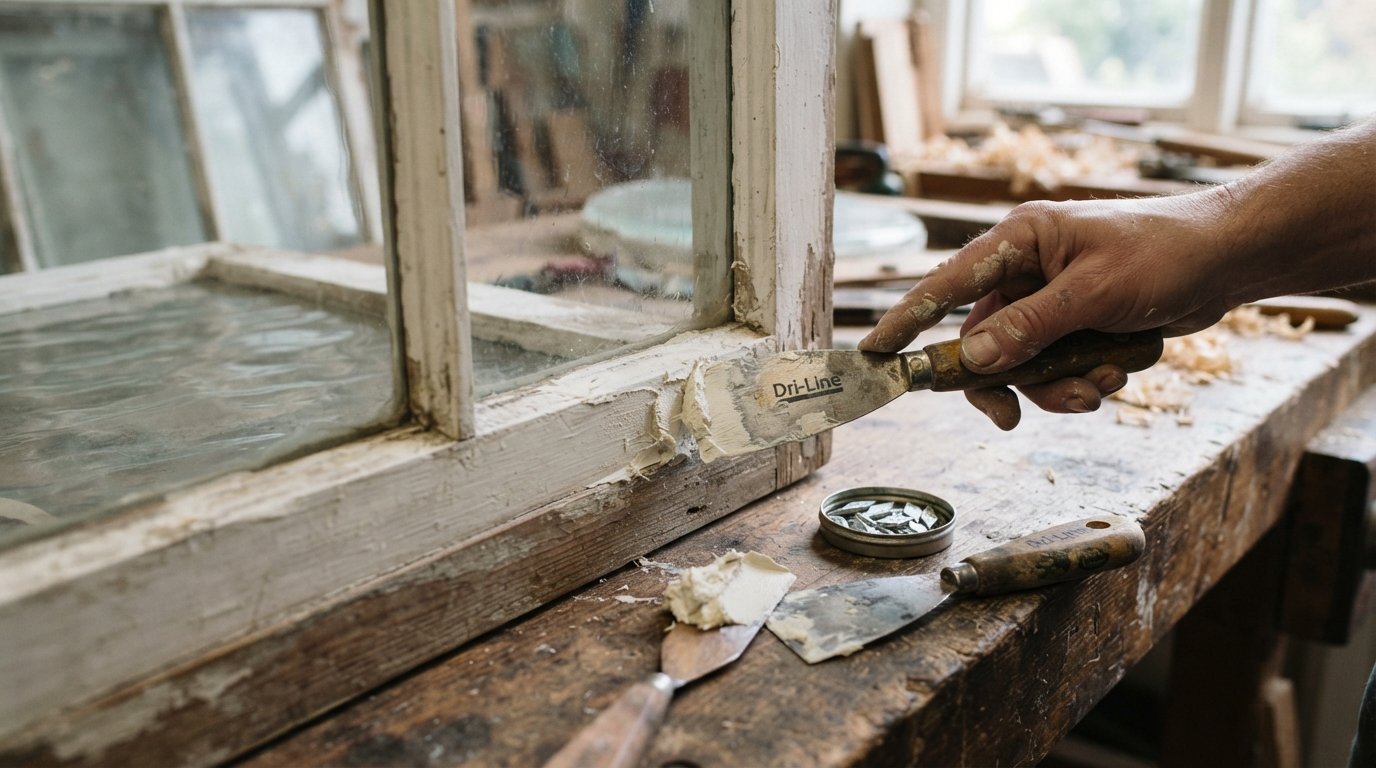
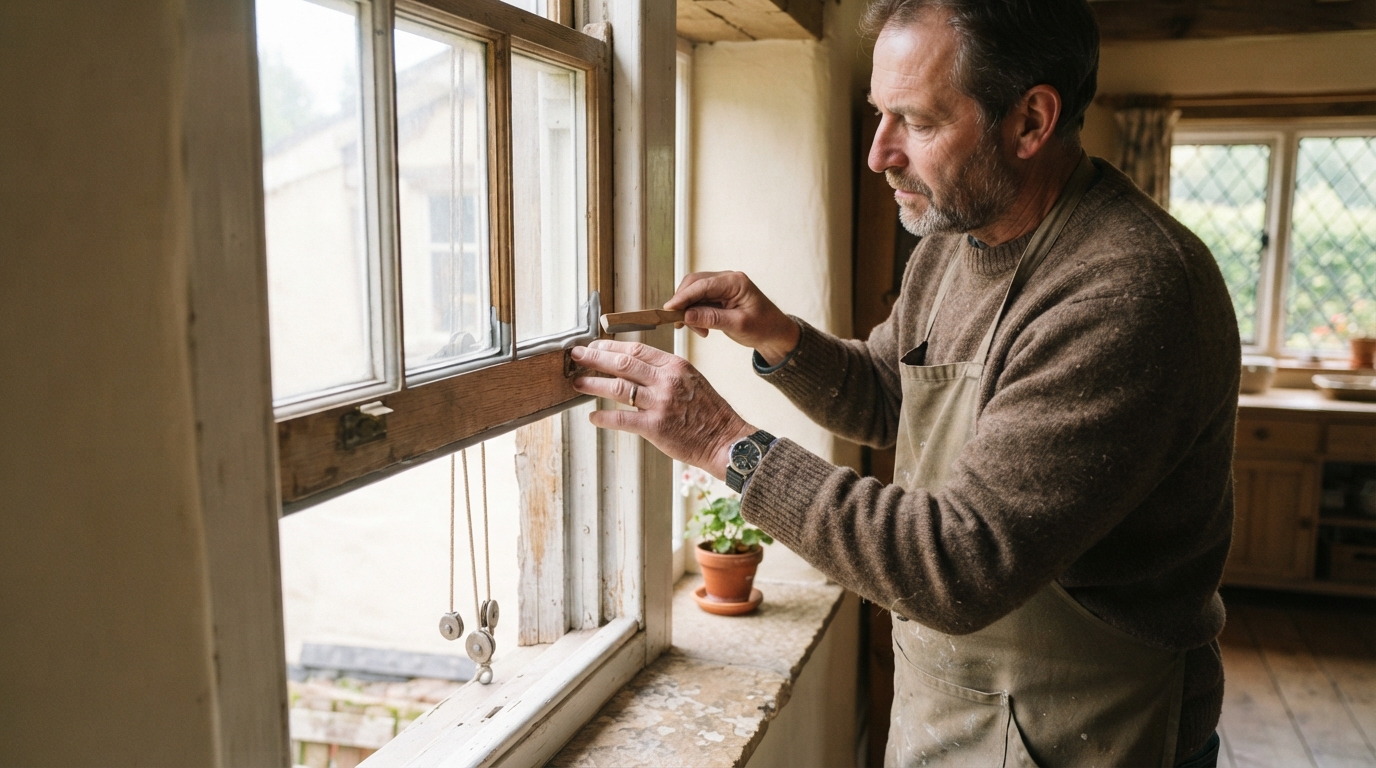
First, the old, cracked putty must be removed. Our craftsmen use a chisel to carefully lift the failed material away from the timber rebate without damaging the surrounding wood or the glass itself.
Second, the timber rebate is inspected for rot or damage before any new material goes in. Skipping this step is the most common mistake we see in amateur repairs.
Third, a bedding layer of fresh putty is applied, the glass pane is set into place, and glazing sprigs (small nails) hold it steady while the final putty line is shaped with a putty knife at the traditional 45-degree angle.
Finally, the putty needs several weeks to skin over before it can be painted, a detail that is easy to overlook but essential to a lasting finish.
Early intervention prevents minor problems from becoming costly repairs.
Choosing the Right Glass When Repairing Sash Window Putty and Glass
Not every pane needs replacing when the putty fails. Original crown glass or float glass from the Victorian era often has small imperfections, ripples, or bubbles that are part of the property’s character.
Where a pane is cracked, badly scratched, or missing entirely, we measure carefully before cutting a replacement. The convention among glaziers is to cut the new pane around one-sixteenth of an inch smaller than the opening, allowing enough tolerance for expansion without a loose, rattling fit.
At The Victorian Sash Company, with over 50 years of combined sash window experience across our team, we know that upgrading to toughened glass is one of the most practical, responsible steps you can take, without touching the beauty of your heritage home.
Toughened glass is roughly five times stronger than standard glass of the same thickness, and when it does break, it fractures into small, blunt fragments rather than dangerous shards. For ground-floor sashes, low-level panes, or homes with young families, this is a sensible safety consideration alongside the visual repair.
Did You Know?
60% of homeowners prioritise energy efficiency during window upgrades, a key benefit of well-maintained putty and glass.
Source: HIRI
Stripping Old Paint Without Damaging Original Glass
Before any putty repair begins, decades of old paint often need to come off the glazing bars and window frame. This step is more delicate than most homeowners realise.
Heat guns, chemical strippers, and scrapers can all etch or crack original glass if used carelessly near the edges. Masking and shielding the pane properly, choosing the right solvent for the job, and working slowly around glazing beads all matter here.
We explain the full process, including the tools and techniques we rely on, in our guide to stripping paint without damaging original glass.
The Draught-Proofing First Philosophy for Long-Term Comfort
The “draught-proofing first” approach for Victorian sash windows has become the most practical and cost-effective route to quick comfort wins.
When putty has failed and glass sits loosely in its rebate, draughts are almost always part of the problem alongside the visible damage. Addressing both together, rather than one in isolation, gives a more complete result.
Discreet brush and compression seals fitted around the sash boxes reduce rattles, noise, and cold air infiltration without altering the window’s appearance from the street. Combined with fresh putty and sound glass, the difference in comfort through a Cheshire winter is considerable.
For homes considering a fuller upgrade, our double glazing in original sash boxes service integrates slim glazing units into period frames, offering warmth and efficiency without sacrificing period elegance.
When Repairing Sash Window Putty and Glass Makes Sense: Repair vs Replace
Not every window needs full replacement, and deciding when to repair rather than replace is a question we help homeowners answer regularly.
As a rough benchmark, replacing a single window unit typically costs between £450 and £1,500, which puts targeted putty and glass repair firmly in perspective as the more economical option in most cases.
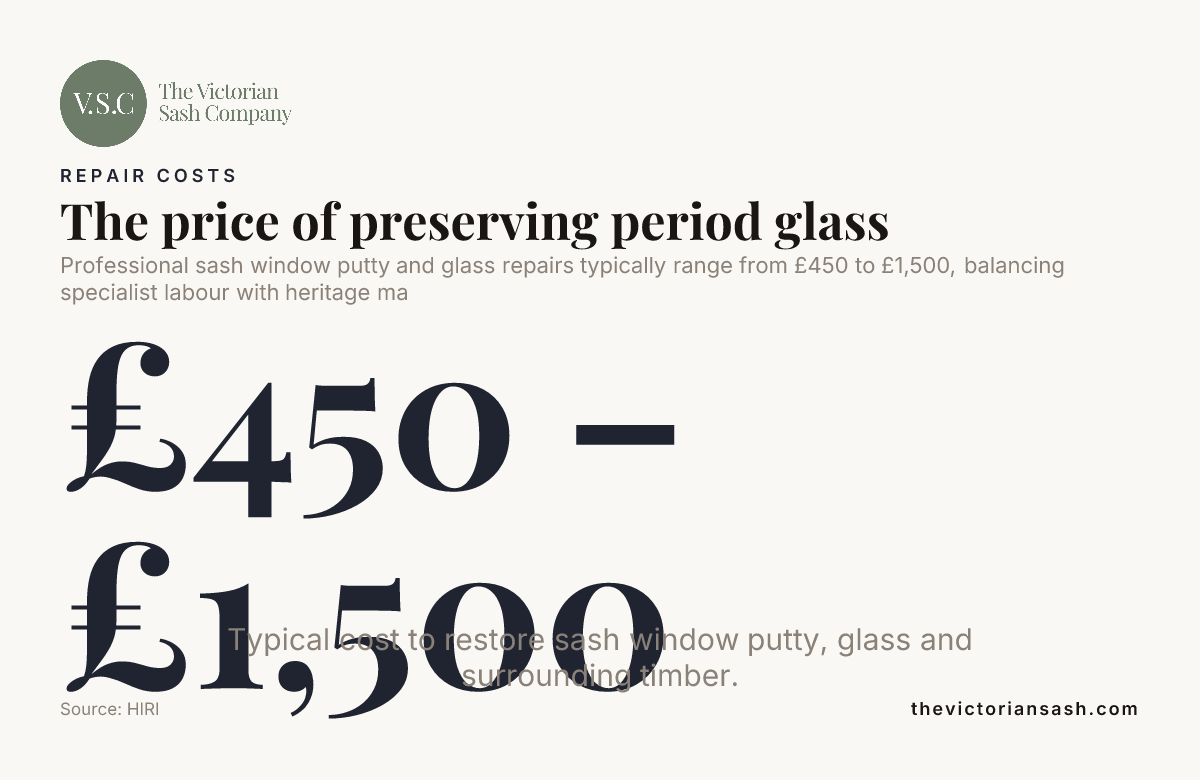
Professional sash window putty and glass repairs typically range from £450 to £1,500, balancing specialist labour with heritage materials.
The table below sets out how we typically advise homeowners to weigh their options.
| Condition | Recommended Approach |
|---|---|
| Cracked putty, glass intact and secure | Re-putty only, retain original glass |
| Loose or cracked pane, sound timber | Replace glass, re-putty, keep original sash |
| Rotten timber beneath the putty line | Timber repair first, then glazing and putty work |
| Multiple sashes failing across property | Full sash window restoration assessment |
Painting and Finishing After Repairing Sash Window Putty and Glass
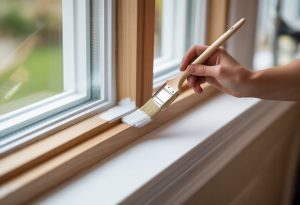
Once new putty has skinned over, usually after two to three weeks depending on the weather, the finishing paintwork protects everything underneath.
The paint you choose will determine how long your work lasts. A quality exterior-grade paint, applied in thin, even coats and slightly overlapping onto the glass by around one to two millimetres, seals the putty against moisture and UV damage.
Masking the glass properly before painting prevents unwanted bleed and keeps the finish crisp. Our full guide on how to paint sash windows walks through preparation, priming, and finishing in more depth.
Why Professional Restoration Matters for Grade II Listed Homes
Grade II listed buildings carry legal obligations around how repairs are carried out, and putty and glass work is no exception.
Local conservation officers across Cheshire, from Wilmslow to Alderley Edge, expect repairs that match original materials and methods rather than modern shortcuts. Getting this wrong can create complications when selling a listed property later.
Over a third of window projects nationally are motivated by a desire to improve home safety and security, and that figure rises sharply where loose glass or failing putty is the starting point.
Did You Know?
36% of window projects are driven by a desire to improve home safety and security.
Source: HIRI
We specialise in Victorian sash windows across Cheshire, offering bespoke solutions for heritage homes in Knutsford, Wilmslow, and Macclesfield. Each project respects the original designs while adding security enhancements where the homeowner requests them, work we also cover through our dedicated sash window security services.
How Long Sash Window Putty and Glass Repairs Should Last
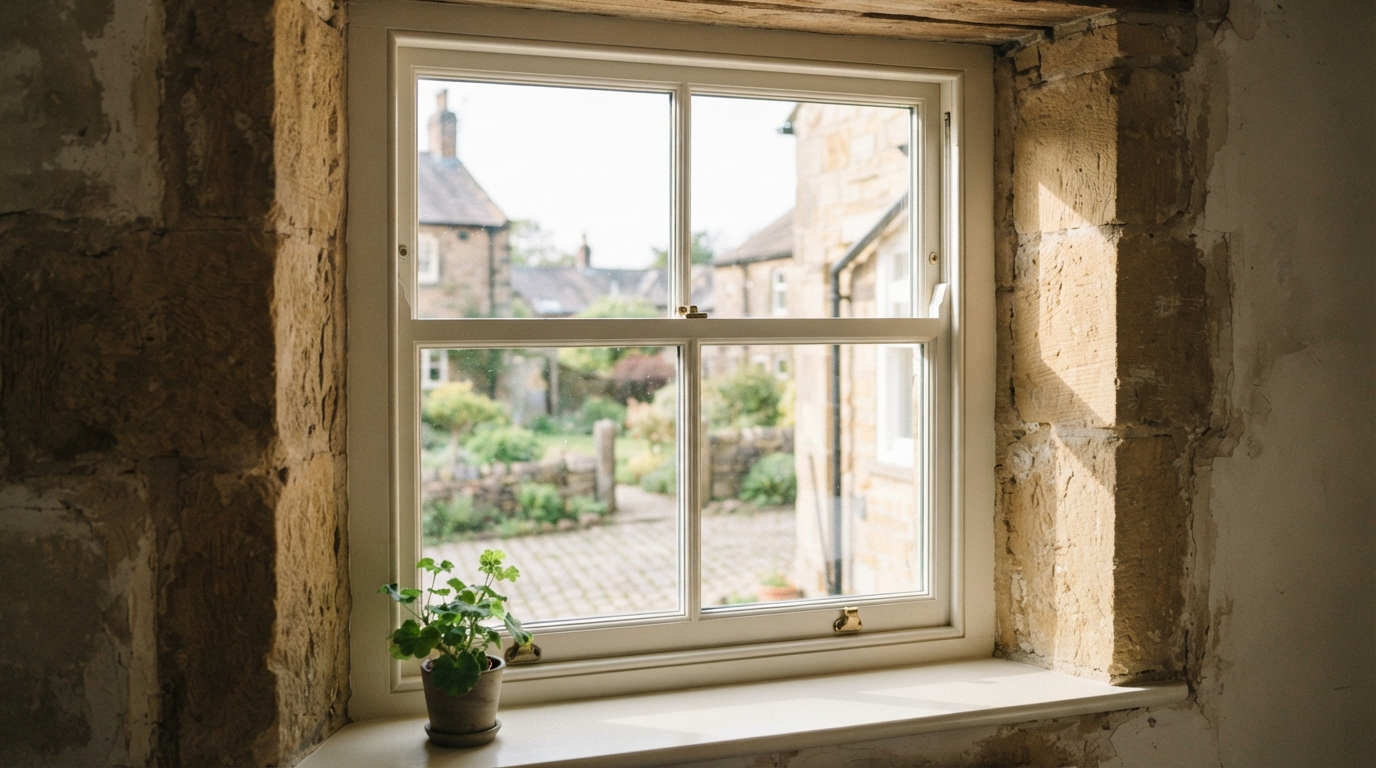
Well-applied linseed putty, properly primed and painted, should last between fifteen and twenty years before it needs attention again.
Repairs that fail sooner usually point to one of two causes: putty applied without a proper bedding layer, or paintwork that was rushed before the putty had fully skinned over. Both are avoidable with patience and the right technique.
Our craftsmen combine decades of experience with traditional joinery methods, which is part of why our repairs are built to outlast quicker, less careful alternatives available elsewhere.
Not a Cosmetic Afterthought
Repairing sash window putty and glass is not a cosmetic afterthought. It is one of the most effective ways to protect the timber beneath, improve safety, and keep a period property comfortable through every season.
Whether you need full replacements, double glazing, or careful restoration, we ensure every detail respects original designs. Our portfolio showcases Victorian sash windows restored and installed across Cheshire, from Warrington to Manchester, and repairing sash window putty and glass remains one of the most requested services we provide.
Crafted for Tradition, Built for Today.
Frequently Asked Questions
How do I know if my sash window putty needs repairing?
Look for visible cracks, gaps, or missing sections along the edge of the glass, along with flaking paint on the glazing bars. If the glass moves or rattles slightly when touched, repairing sash window putty and glass should be scheduled promptly to prevent moisture reaching the timber.
Can original Victorian glass be kept during a putty repair?
Yes, and in most cases it should be. Original crown or float glass carries visible character that reproduction glass cannot replicate, so we only replace a pane when it is cracked, missing, or structurally unsafe.
Is it worth repairing sash window putty and glass myself?
Small, isolated cracks can be a reasonable DIY project with the right tools and patience. However, work on listed properties, extensive putty failure, or original glass that needs careful handling is better left to a specialist to avoid costly mistakes.
How much does repairing sash window putty and glass typically cost?
Targeted putty and glass repairs are generally far more affordable than full window replacement, which itself ranges from around £450 to £1,500 per unit. A straightforward re-putty job on a single pane costs considerably less than that benchmark.
Should I upgrade to toughened glass when repairing a broken pane?
If a pane needs replacing anyway, toughened glass is a sensible upgrade, particularly at ground-floor level or in homes with children. It offers significantly improved safety while remaining visually indistinguishable from standard glass once fitted.
How long should a sash window putty repair last before it needs redoing?
A properly applied and painted putty repair should last fifteen to twenty years. Repairs that fail earlier are usually the result of insufficient bedding putty or paint applied before the putty had fully skinned over.
Does repairing sash window putty and glass affect a Grade II listed property’s compliance?
Repairs that use matching traditional materials and methods generally satisfy listed building requirements, whereas modern substitutes may not. It is always worth checking with a specialist familiar with local conservation guidance before starting work on a listed home.
Require Assistance with Repairs?
Contact us now on 01606 333943
Mobile: 07789 598238
Email: info@victoriansash.net