
Blog
Stripping Paint Without Damaging Original Glass: A Cheshire Craftsman’s Guide
Stripping paint without damaging original glass is one of the most delicate tasks in sash window restoration, and the stakes are higher than most homeowners realise. The price of fibre laser sources used for precision paint removal has fallen by 60% in recent years, making the kind of careful, glass-safe stripping once reserved for museum conservators far more accessible to ordinary heritage homeowners.
At The Victorian Sash Company, with over 50 years of combined sash window experience across our team, we know that stripping paint without damaging original glass is not a job for guesswork. It requires patience, the right tools, and a genuine respect for the history sitting in every pane.
Key Takeaways
| Question | Quick Answer |
|---|---|
| What’s the safest way to strip paint near glass? | Hand-scraping with a heat-resistant shield or controlled heat guns held at a distance, never direct chemical soaking. |
| Can chemical strippers ruin original glass? | Yes. Harsh solvents can etch, cloud, or craze old glass if left in contact for too long. |
| Is laser paint removal available for homeowners? | Increasingly, yes. Portable systems weighing under 20 kg now allow precision field work on original glass. |
| Should I strip paint myself or hire a specialist? | Small touch-ups can be DIY, but full sash window restoration benefits from specialist hands. |
| Does stripping paint affect a window’s security or insulation? | Not on its own, though it’s often paired with insulation upgrades for lasting comfort. |
| What tools do professionals avoid near original glass? | Aggressive power sanders, sharp metal scrapers used flat against the pane, and open-flame torches. |
| Where can I see examples of glass-safe restoration? | Our gallery shows original glass preserved through careful paint removal. |
Why Stripping Paint Without Damaging Original Glass Matters So Much
Original glass carries the small imperfections, the faint waves and bubbles, that mass-produced modern glass simply cannot replicate.
Once it is scratched, cracked, or clouded during a careless stripping job, that authenticity is gone for good. Stripping paint without damaging original glass is therefore not a cosmetic preference. It is the difference between preserving a piece of period character and quietly erasing it.
We deliver windows that respect heritage while supporting the environment, and that starts with the smallest decisions, including which scraper touches the glass first.
Understanding What Makes Old Glass So Fragile
Victorian and Edwardian glass was often hand-blown or cylinder-drawn, giving it a thinner and less consistent structure than today’s float glass.
Decades of putty, paint layers, and weather exposure can also leave micro-fractures that are invisible until pressure is applied. This is why stripping paint without damaging original glass demands a slower, more deliberate approach than modern window maintenance.
Sash windows bring timeless appeal to any property, but they need regular upkeep to maintain their beauty, and paint removal is one of the moments where that upkeep can go wrong fastest.
Hand-Scraping: The Traditional Route for Stripping Paint Without Damaging Original Glass
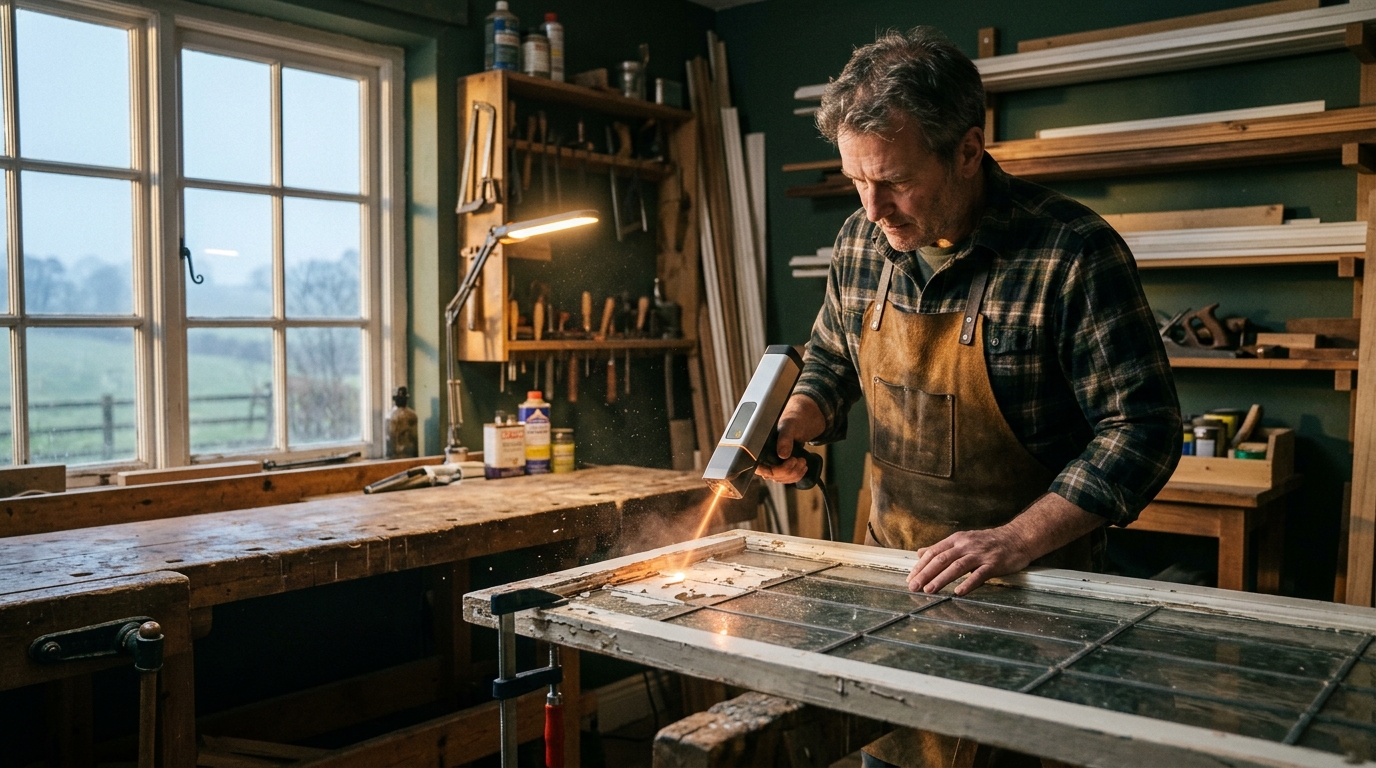
Our craftsmen combine decades of experience with traditional joinery methods, and hand-scraping remains the gold standard for glass-safe paint removal.
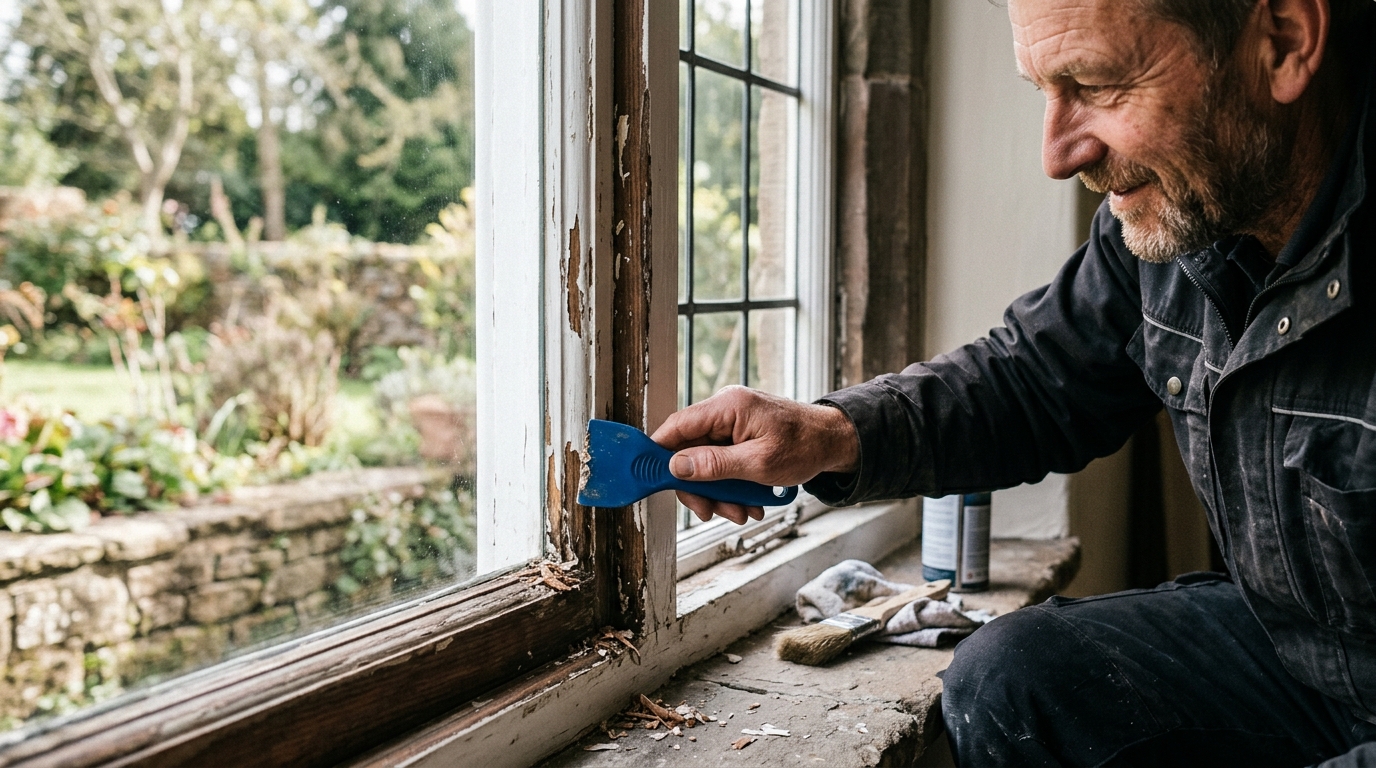
A sharp, well-maintained scraper held at a shallow angle lifts old paint from the wood without ever touching the glazing bars directly. Patience matters more than speed here.
- Use a glass shield or masking card: A thin metal or plastic shield slipped between the sash bar and the glass protects the pane while you work.
- Work in small sections: Trying to strip an entire sash box in one pass increases the risk of slips.
- Keep blades sharp: A dull scraper needs more pressure, and more pressure near old glass is exactly what you want to avoid.
Heat Guns, Steam, and Chemical Strippers: Weighing the Options
Heat guns are effective for softening thick, layered paint, but they must be kept moving and held well back from the glazing to avoid thermal shock cracking.
Steam strippers offer a gentler alternative, softening paint through moisture rather than direct heat, though they require more time.
Chemical strippers can be useful for stubborn corners, but they carry real risk. Left in contact with old glass for too long, solvents can etch or cloud the surface permanently, which is the opposite of stripping paint without damaging original glass.
The paint you choose will determine how long your work lasts.
That principle applies just as much to what you use to remove old paint as to what you apply afterwards.
Did You Know?
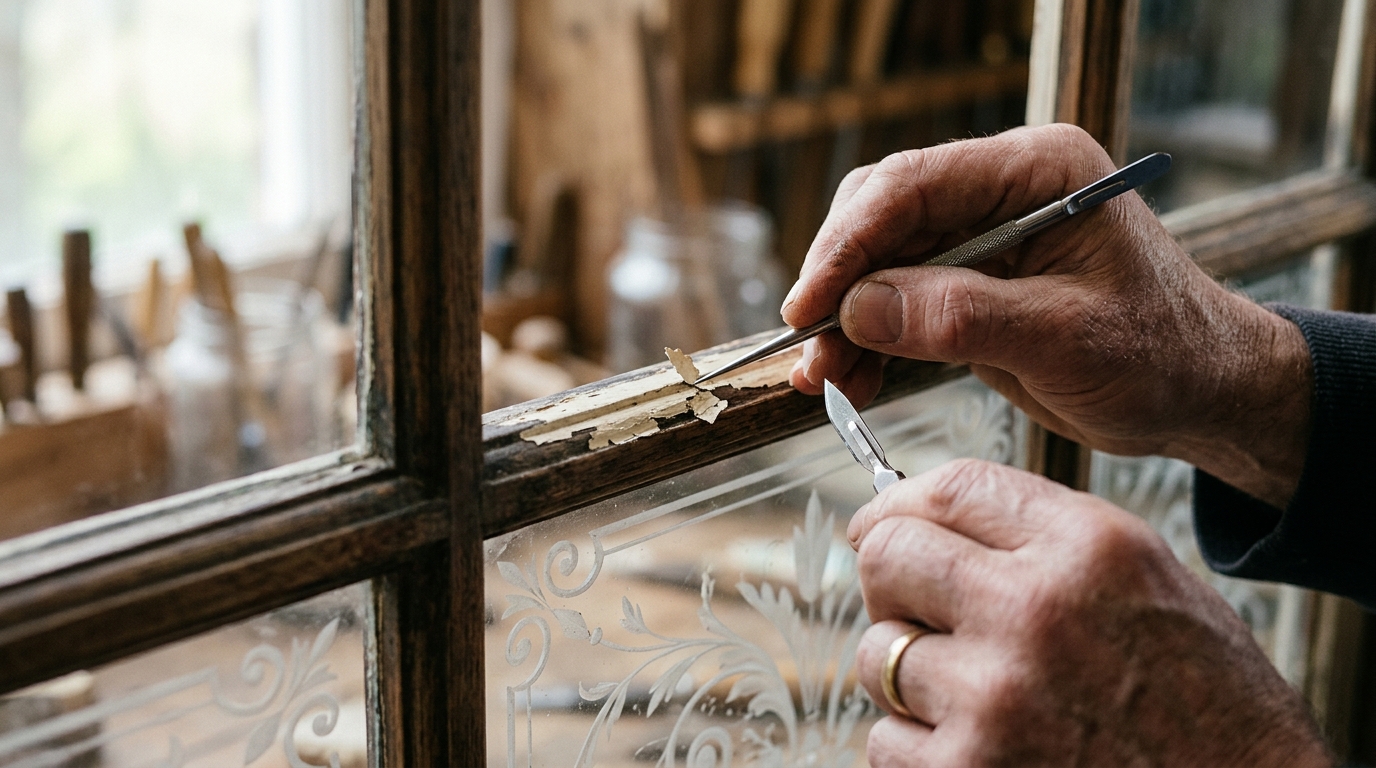
Portable hand-held laser cleaning systems now weigh under 20 kg, allowing precision field cleaning of in-situ window frames and original glass.
Source: SNS Insider
The Rise of Laser Cleaning for Precision Paint Removal
Laser cleaning has moved from industrial workshops into heritage restoration, and for good reason.
Because the laser targets only the paint layer and leaves the substrate beneath untouched, it offers one of the most reliable methods available for stripping paint without damaging original glass, particularly around delicate glazing bars and putty lines. It is not yet the standard tool in every restorer’s kit, but its precision explains why interest in it continues to grow among specialists who care for Grade II listed buildings.
Common Mistakes That Damage Original Glass When Stripping Paint
Most damage we see is avoidable, caused by rushed technique rather than bad intentions.
- Sanding flat against the pane: Power sanders can chip edges instantly.
- Using a torch too close to the glass: Sudden temperature changes can crack old glass in seconds.
- Ignoring loose putty: Prying at hardened putty without softening it first often pulls glass with it.
- Skipping the shield step: Even experienced hands benefit from a physical barrier during scraping.
Early intervention prevents minor problems from becoming costly repairs, and that principle applies directly to paint stripping. A small chip caught early is a simple fix. A cracked pane from careless stripping is a full replacement, and with it, a piece of history lost.
Where Paint Stripping Fits Into Our Draught-Proofing First Philosophy
The “draught-proofing first” approach for Victorian sash windows has become the most practical and cost-effective route to quick comfort wins, and paint condition plays a direct role in that.
Old, flaking paint often hides gaps and worn brushes around the sash boxes that let draughts through. Stripping paint without damaging original glass, followed by careful re-glazing and draught-proofing, restores both the look and the performance of the window in one coordinated process.
Whether you need full replacements, double glazing, or careful restoration, we ensure every detail respects original designs, and that includes what happens before a single brushstroke of new paint goes on.
Did You Know?
~20%
Source: DeVooght House Lifters
Protecting Original Glass During Double Glazing and Security Upgrades
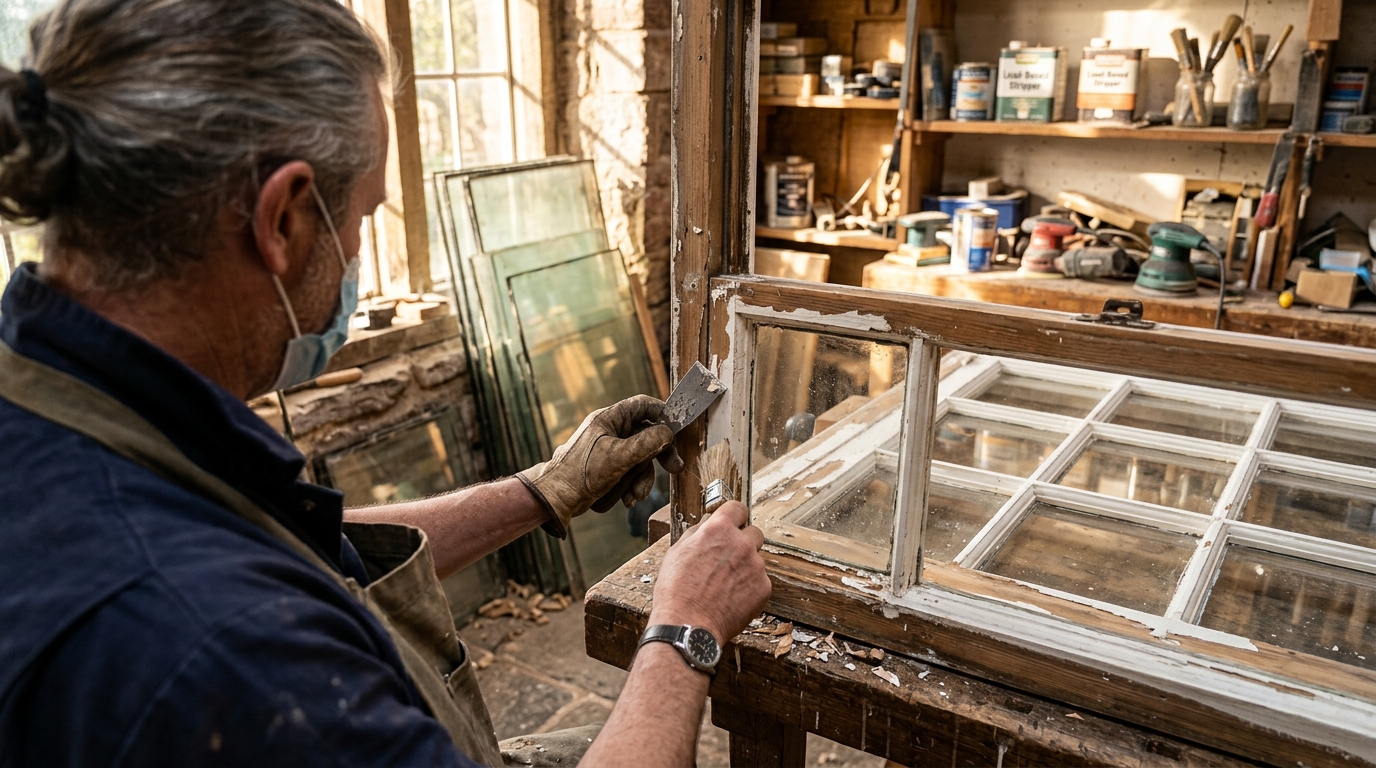
Homeowners often ask whether upgrading to security-enhanced sash windows or modern glazing means the original glass has to go.
It does not, provided the paint removal and re-fitting process is handled with care. Each window is designed to maintain the period character of your property while improving insulation, security, and style, and that starts with protecting the glass during every stage of the work, not just at the end.
We specialise in Victorian sash windows across Cheshire, offering bespoke solutions for heritage homes, and our full range of sash window services reflects that same careful approach from first scrape to final coat.
Professionals overwhelmingly prioritise keeping original glass intact when stripping paint from historic windows.
Why DIY Restoration Is Growing, and Why Original Glass Still Needs Expert Eyes
A growing majority of homeowners, around 62 percent, are now choosing to repair existing structures and items rather than opting for complete replacement, and sash windows are very much part of that trend.
We welcome this shift. It aligns with everything we believe about sustainability and honouring the character of a heritage home rather than stripping it out.
That said, stripping paint without damaging original glass is one of the areas where a second opinion from a specialist pays for itself. A quick consultation before you pick up a scraper can save a pane that has survived over a century.
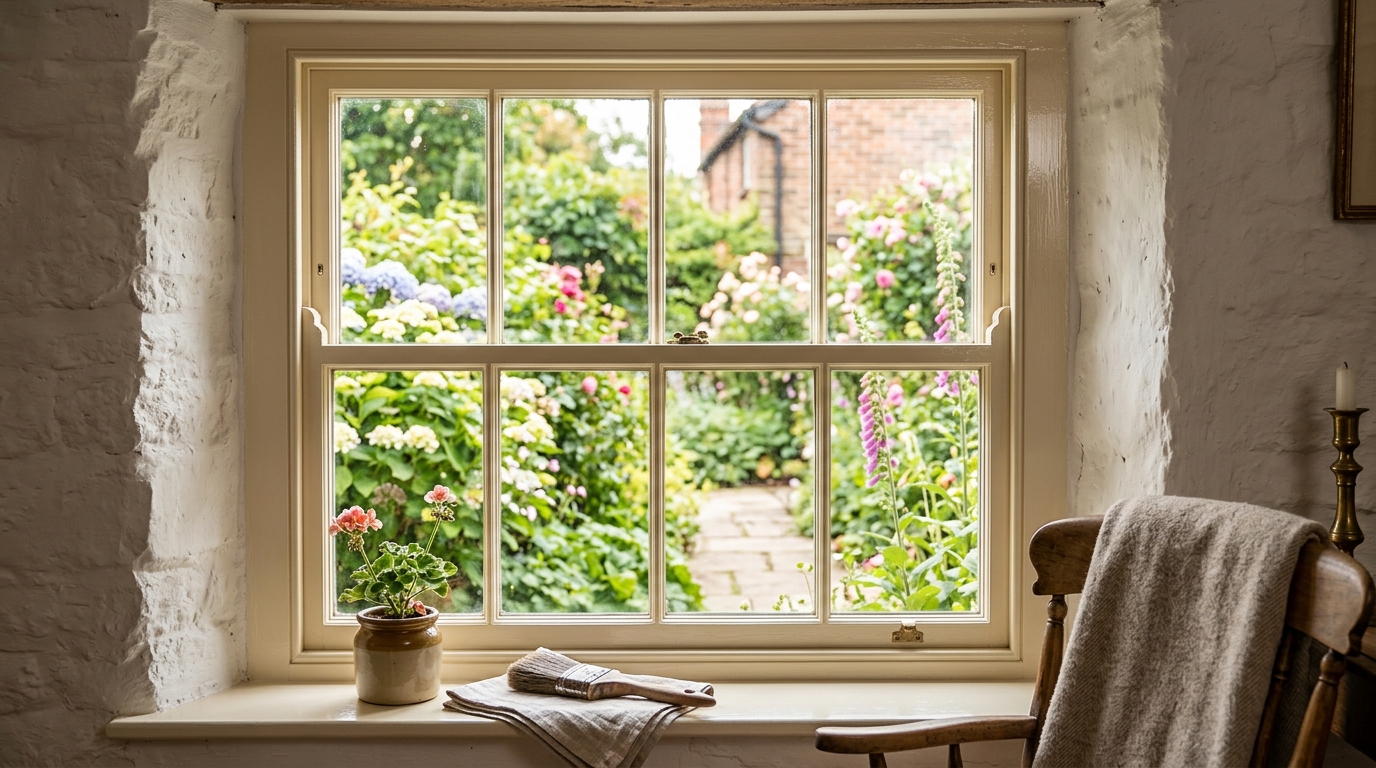
Sash Window Restoration Across Cheshire: Local Expertise You Can Trust
As a Cheshire-based company, we bring the same glass-safe approach to every town we serve, from period terraces to larger listed properties.
Our portfolio showcases Victorian sash windows restored and installed across Cheshire, including work in Knutsford, Wilmslow, Alderley Edge, Chester, Sandbach, Middlewich, Warrington, Manchester, and Macclesfield.
Each project follows the same principle: preserve the original glass wherever it can be saved, and only replace it when safety genuinely demands it.
Federal and State Support for Preserving Original Materials
For owners of certified historic properties, the financial argument for careful, glass-safe restoration is stronger than many realise.
Federal historic rehabilitation credits can cover roughly 20% of qualified expenses for income-producing preservation projects, and many states add a further 10 to 25% on top for maintaining certified historic properties. Those incentives exist precisely because authorities recognise that stripping paint without damaging original glass, and preserving original fabric generally, has value beyond the individual homeowner.
When to Call in a Specialist Rather Than DIY the Job
Quality remains the top driver for homeowners selecting materials and methods for specialised restoration work, with figures as high as 82 to 88 percent citing it as their primary concern.
That instinct is correct. If a window is Grade II listed, if the glass shows existing cracks, or if previous paint layers contain lead, stripping paint without damaging original glass becomes a job worth handing to someone with the right training and tools.
Our frequently asked questions page covers many of the specific scenarios we’re asked about most often, from listed building consent to what to do with cracked putty.
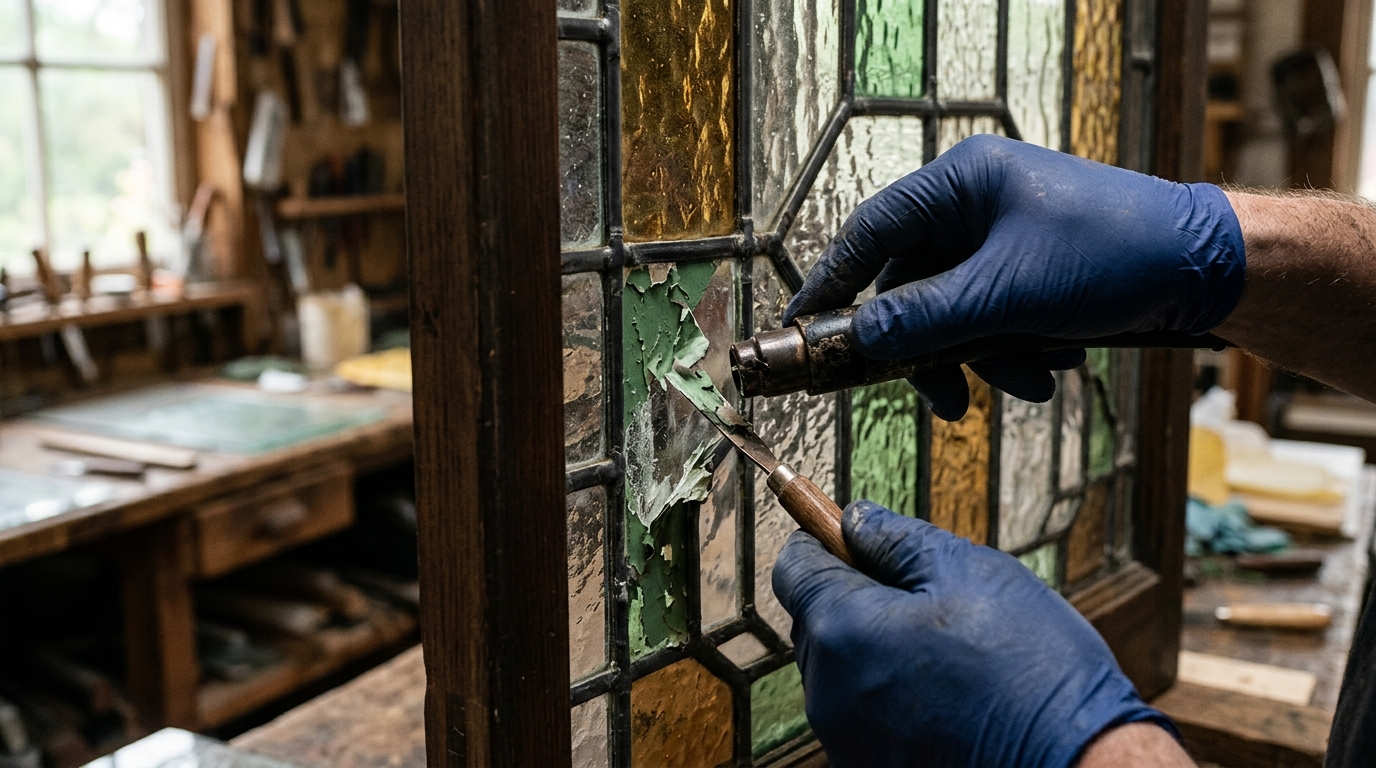
The Right Technique
Stripping paint without damaging original glass is achievable with the right technique, whether that means a careful hand-scrape, a controlled heat gun, or increasingly, precision laser cleaning.
What it always requires is patience and respect for materials that cannot be remade once they are gone. Crafted for Tradition, Built for Today, we approach every restoration with that same standard, protecting original glass while bringing comfort, security, and lasting beauty back to Cheshire’s period homes.
If you would like an assessment of your own sash windows before you begin any paint removal, get in touch with our team.
Frequently Asked Questions
What is the best method for stripping paint without damaging original glass?
Hand-scraping with a protective glass shield is generally the safest method, followed by controlled heat gun work for thicker layers. Laser cleaning is emerging as an even more precise option for specialists working on delicate original glass.
Can I use a heat gun near old window glass?
Yes, but only if it is kept moving constantly and never held directly against the pane. Sudden heat concentrated on one spot can crack original glass that has already weakened with age.
Is it safe to strip paint myself on a listed building’s windows?
Small, careful touch-ups are usually fine, but Grade II listed properties often have specific consent requirements around restoration methods. It is worth checking with your local conservation officer and a specialist before starting any significant paint removal.
How do I know if my old glass is too fragile to strip paint near?
Look for existing hairline cracks, cloudiness, or uneven thickness, all signs that the pane needs extra caution. If in doubt, a specialist assessment before you begin is far cheaper than replacing a shattered original pane.
Does chemical paint stripper damage original window glass?
It can, particularly if left in contact with the glass for extended periods, as solvents may etch or cloud the surface permanently. Gel-based strippers applied carefully to the wood only, kept well away from the glazing, reduce this risk significantly.
Is laser paint removal worth it for home restoration projects?
For homeowners with valuable original glass or listed status, laser cleaning offers a level of precision that traditional methods cannot always match. It remains a specialist service rather than a common DIY tool, but interest in it continues to grow as the technology becomes more affordable.
How much does professional sash window paint stripping cost?
Costs vary depending on the number of windows, paint layer thickness, and whether the glass needs additional protection during the process. We recommend a site visit for an accurate quote, since stripping paint without damaging original glass on a listed property differs significantly from a straightforward Victorian terrace.
Require Assistance with Repairs?
Contact us now on 01606 333943
Mobile: 07789 598238
Email: info@victoriansash.net