Selecting Period-Correct Hardware for Sashes: A Cheshire Craftsman’s Guide
Sliding closing devices for windows are graded for durability based on their ability to sustain between 5,000 and 20,000 cycles of use without losing function. That figure alone explains why selecting period-correct hardware for sashes is never a decision to rush, and why we treat every pulley, lock, and lift as a piece of engineering as much as a piece of history.
Key Takeaways
| Consideration | What We Recommend |
|---|---|
| Material Authenticity | Choose cast brass or bronze fittings that match the period of the property, not modern alloy substitutes. |
| Function vs. Style | Selecting period-correct hardware for sashes always balances traditional joinery with everyday usability. |
| Grade II Listed Homes | Consent is often required before altering visible hardware; we guide clients through this process. |
| Common Failure Points | Pulleys, cords, and weights wear first. See our complete guide to sash window problems for the warning signs. |
| Safety Additions | Restrictors and discreet locks can be fitted without compromising period character. |
| Maintenance | Regular servicing extends hardware life significantly. Browse our maintenance guidance for seasonal care tips. |
| Finish Longevity | The paint and lacquer you choose determines how long the hardware and surrounding timber will last. |
Why Selecting Period-Correct Hardware for Sashes Matters for Heritage Homes
At The Victorian Sash Company, with over 50 years of combined sash window experience across our team, we know that hardware is where heritage authenticity is won or lost. A window can have the correct proportions, the correct glazing bars, and still look wrong if the ironmongery is not right for the period.
Selecting period-correct hardware for sashes is about respecting the original craftsmanship of Victorian and Edwardian joiners. It is also about function: sash boxes rely on properly weighted pulleys and cords to operate smoothly, and getting this wrong affects both appearance and everyday use.
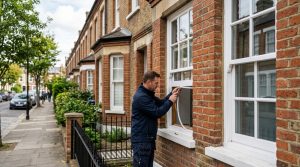
We specialise in Victorian sash windows across Cheshire, offering bespoke solutions for heritage homes from Knutsford to Wilmslow and Alderley Edge. In every project, the hardware conversation happens early, because it shapes decisions about glazing, security, and finish.
Understanding the Anatomy of Sash Window Hardware
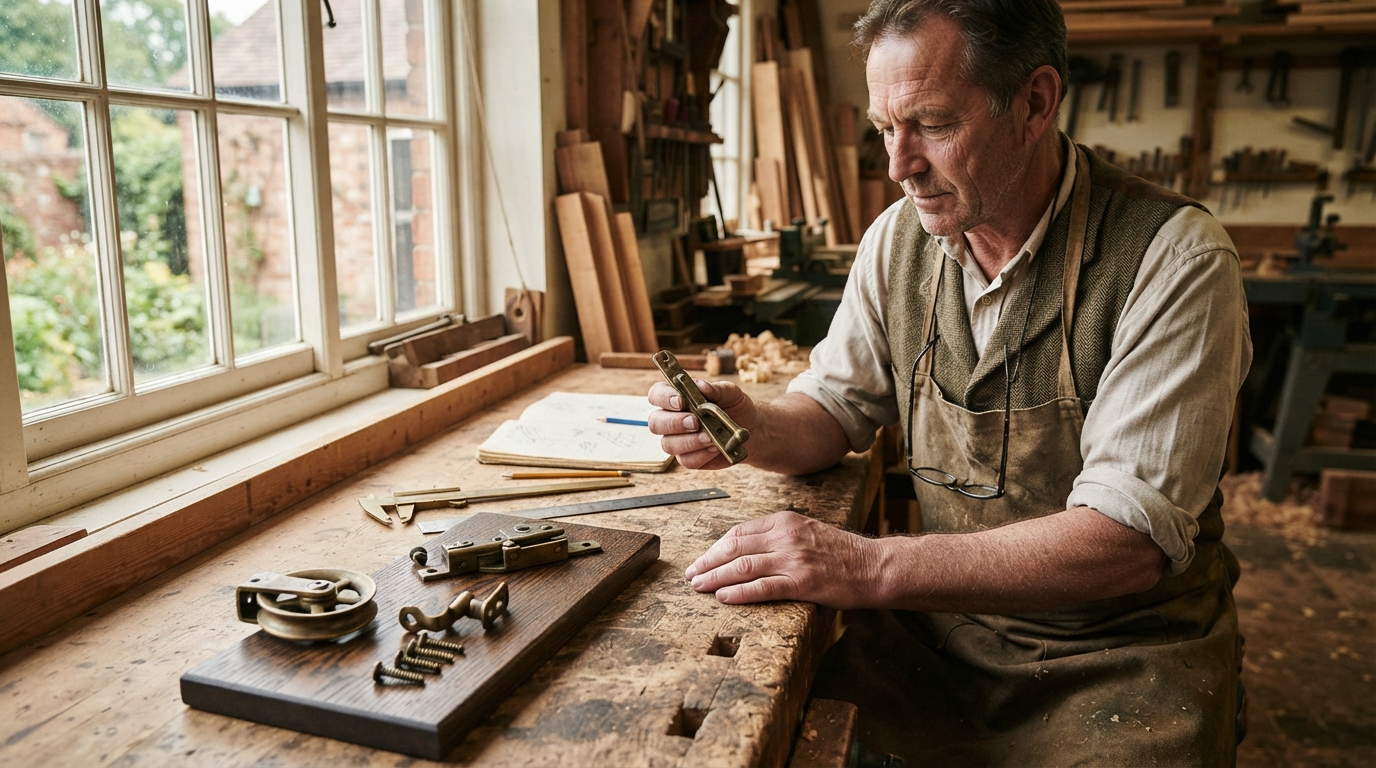
Before selecting period-correct hardware for sashes, it helps to understand what is actually inside a working sash box. Each component has a job, and each affects how the window feels to operate.
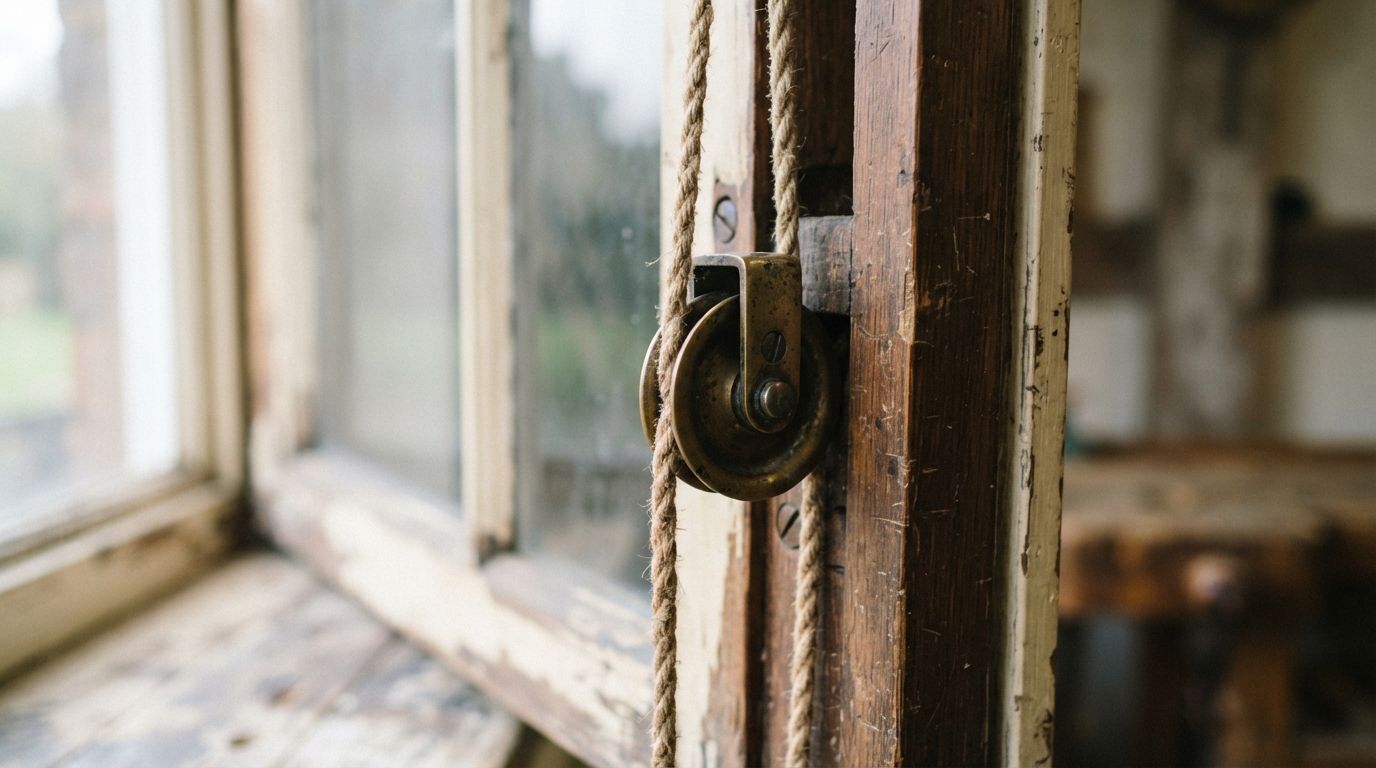
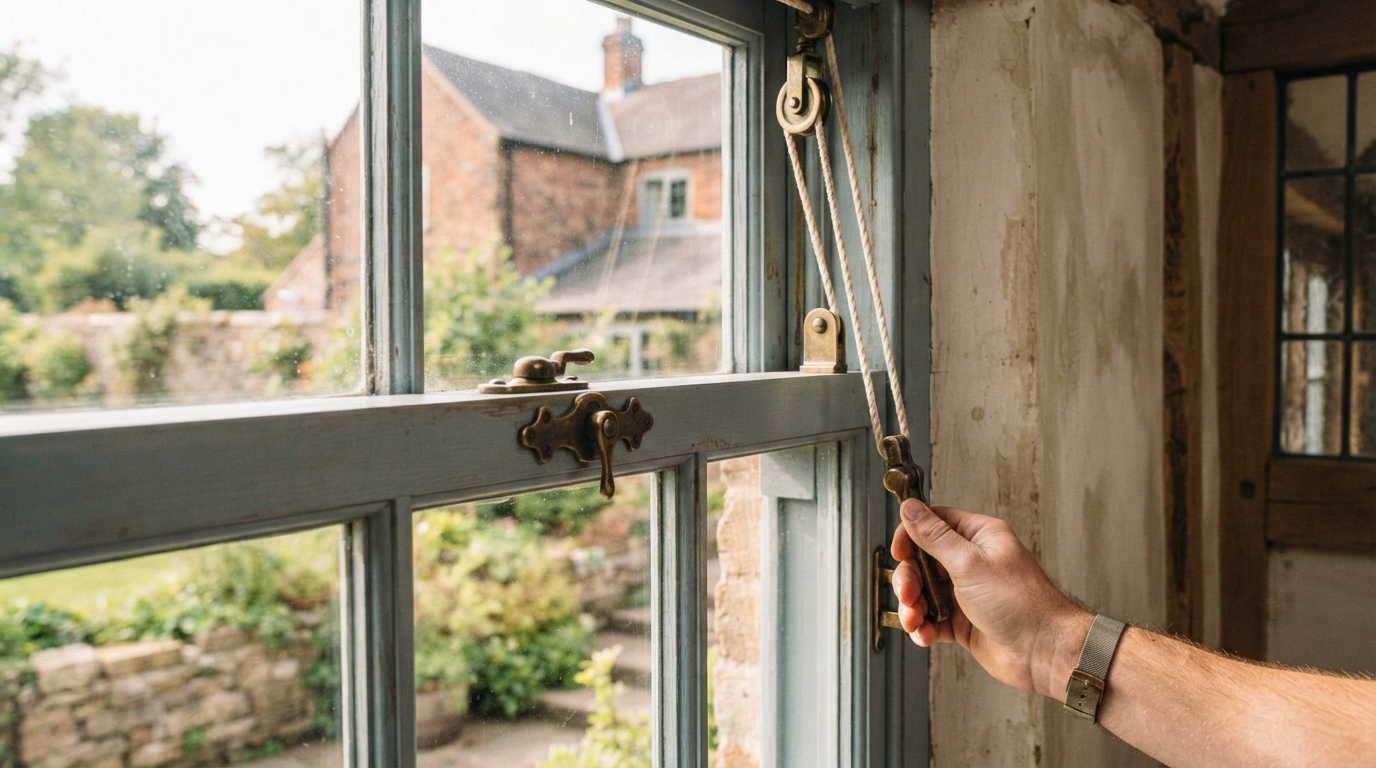
- Pulleys: Cast iron or brass wheels that guide the sash cords smoothly within the box.
- Sash cords or chains: Connect the sash to the counterweights, allowing the window to glide rather than drop.
- Counterweights: Cast iron weights hidden within the box, sized precisely to the weight of the glass and timber.
- Sash lifts: Handles fitted to the bottom rail, used to raise the lower sash.
- Fasteners and locks: The visible security hardware, often the most decorative element of the window.
Our craftsmen combine decades of experience with traditional joinery methods when replacing or restoring any of these parts. Early intervention prevents minor problems from becoming costly repairs, particularly with pulleys and cords, which wear silently until a sash suddenly refuses to move.
Selecting Period-Correct Hardware for Sashes: Locks, Fasteners and Security Fittings
Security fittings are often the first thing a visitor notices on a sash window, which makes getting the style right essential. Victorian fitch fasteners, for example, have a distinctive curved lever action that modern security locks rarely replicate accurately.
Discreet upgrades are available that maintain period elegance while meeting today’s security expectations. We deliver windows that respect heritage while supporting the environment, and the same principle applies to security: a fitting can be both authentic and robust.
For homeowners concerned about break-ins without wanting visible modern locks, our sash window security services cover exactly this balance, offering upgrades that stay true to original designs.
Did You Know?
Homeowners can expect to recoup 63 per cent of the cost of new wood windows when selling their home.
Source: Consumer Reports
Child Safety Without Compromising Period Character
Families living in period properties often ask whether sash windows can be made safer for young children without ruining the look of the room. The answer is yes, and it does not require replacing original hardware.
Discreet restrictors, key-operated stops, and secondary locks can be fitted so they sit almost invisibly against the timber. This keeps period character intact while giving parents peace of mind.
We cover this topic in detail in our guide on essential safety solutions for period properties, which explains the options available for different window ages and conditions.
Common Hardware Issues With Sash Windows and How to Spot Them
Sash windows bring timeless appeal to any property, but they need regular upkeep to maintain their beauty. Hardware faults are usually the first sign that a window needs attention.
The most frequent issues include:
- Sticking sashes caused by worn or misaligned pulleys.
- Unwanted draughts around loose or missing fasteners.
- Snapped sash cords, which cause the window to drop suddenly.
- Timber rot around the pulley stiles, weakening the fixing points for hardware.
- Difficulty opening and closing due to seized counterweights.
Our full breakdown of these problems, along with practical solutions, is available in our article on common issues with sash windows. Catching these faults early is always cheaper than waiting for a full sash box rebuild.
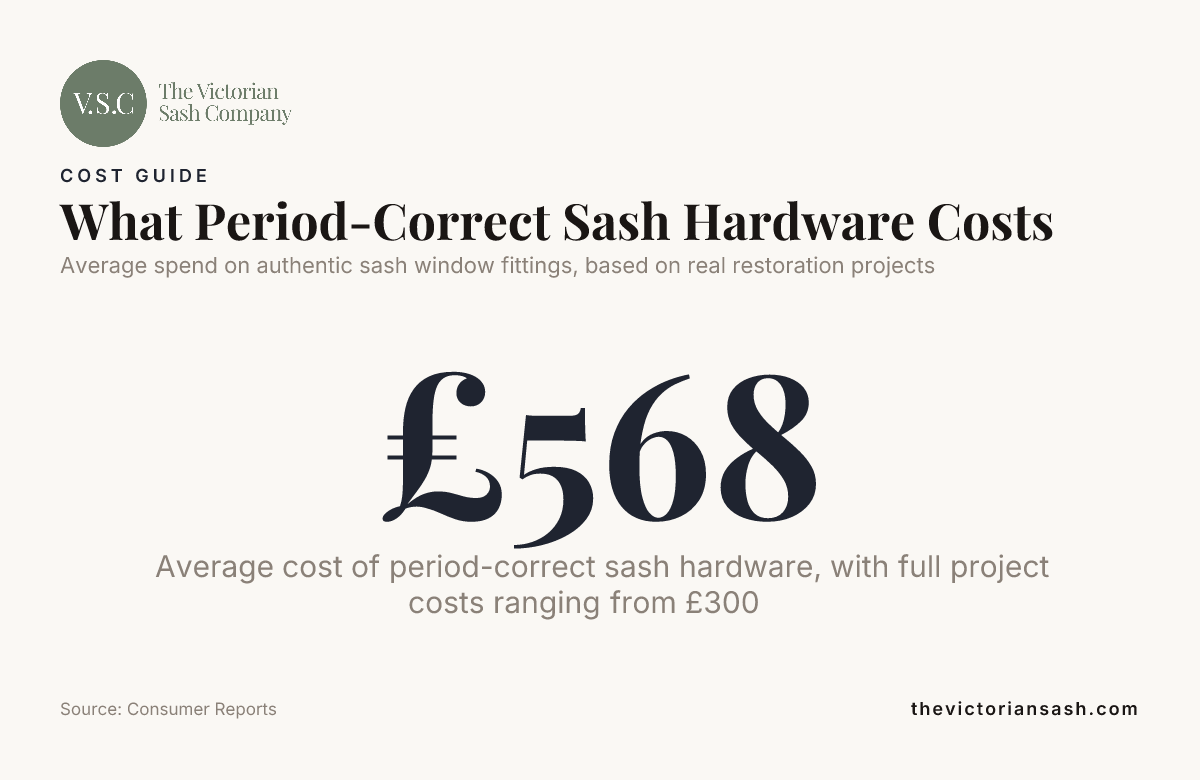
Average spend on authentic sash window fittings, based on real restoration projects
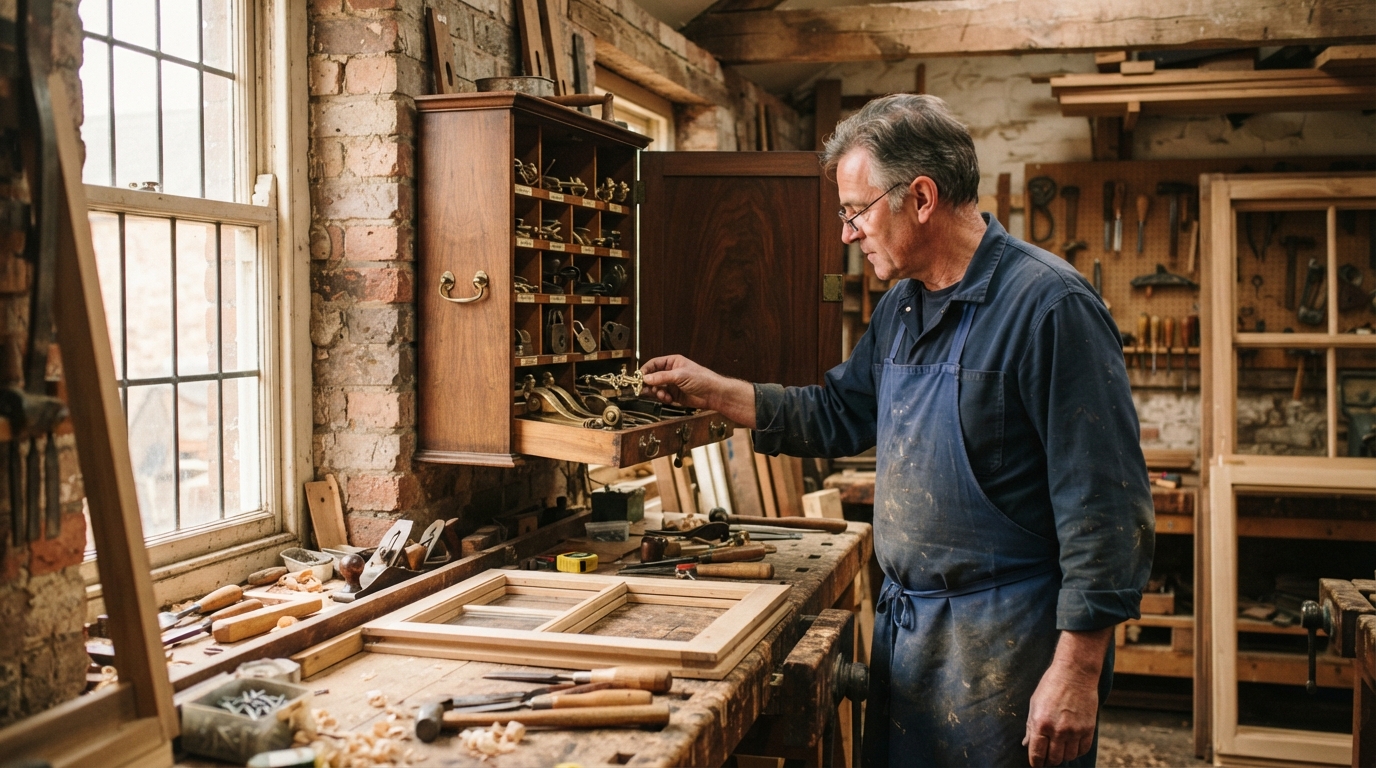
Painting and Finishing Sash Hardware for a Period-Correct Look
The paint you choose will determine how long your work lasts, and this applies to the timber surrounding your hardware as much as the sash itself. Poor preparation around fittings traps moisture and accelerates rot at exactly the point where fasteners are fixed.
We recommend removing hardware where possible before painting, cleaning it separately, and refitting once the finish has fully cured. This keeps both the ironmongery and the surrounding joinery in good condition for longer.
Our step-by-step advice on preparation, priming, and painting is set out in full in how to paint sash windows, which covers the sequence we follow on every restoration.
Selecting Period-Correct Hardware for Sashes in Grade II Listed Properties
Grade II listed buildings bring an extra layer of responsibility. Local authorities often require that visible hardware, including fasteners, lifts, and hinges, match the original style as closely as possible.
This is where selecting period-correct hardware for sashes becomes as much about compliance as it is about aesthetics. We work closely with homeowners and conservation officers to source or replicate fittings that satisfy listed building consent while still functioning to modern standards.
Where double glazing is being considered alongside a hardware upgrade, our guide to double glazing solutions for Grade II listed buildings explains how we approach both requirements together.
Selecting Period-Correct Hardware for Sashes: Sustainability Meets Authenticity
Sustainability is not usually the first word people associate with Victorian ironmongery, but it belongs in the conversation. Restoring existing brass and cast iron hardware, rather than discarding it for cheap replacements, reduces waste and preserves original craftsmanship.
Under the UK’s Future Homes Standard, the maximum allowable window U-value is 1.2 W/m²K, which means hardware and sash boxes now need to work harder alongside efficient glazing to meet performance targets. Selecting period-correct hardware for sashes therefore increasingly means choosing fittings engineered to support tighter seals without sacrificing appearance.
Did You Know?
The UK’s Future Homes Standard sets a maximum window U-value of 1.2 W/m²K, requiring high-performance sash hardware and frames.
Source: Mordor Intelligence
We deliver windows that respect heritage while supporting the environment, and our approach to double glazing in original sash boxes reflects the same philosophy applied to hardware. Read more in our article on the benefits of installing double glazing in original sash boxes.
Our Draught-Proofing First Approach to Hardware Choices
The “draught-proofing first” approach for Victorian sash windows has become the most practical and cost-effective route to quick comfort wins. Before recommending new hardware, we assess whether existing fittings simply need adjustment, re-seating, or draught-proofing seals fitted around them.
This tiered approach saves homeowners money and avoids unnecessary replacement of hardware that still has years of life left. Only once draught-proofing has been addressed do we discuss whether selecting period-correct hardware for sashes is the next sensible step.
Whether you need full replacements, double glazing, or careful restoration, we ensure every detail respects original designs.
Not a Cosmetic afterthought
Selecting period-correct hardware for sashes is not a cosmetic afterthought. It affects security, safety, energy performance, and the long-term health of the timber itself.
Our portfolio showcases Victorian sash windows restored and installed across Cheshire, and hardware selection sits at the heart of every one of those projects. Crafted for Tradition, Built for Today, we are always happy to talk through the right fittings for your property, whatever its age or listing status. Visit our homepage to see more of our work.
Frequently Asked Questions
What is period-correct hardware for sash windows?
Period-correct hardware refers to fasteners, lifts, pulleys, and locks styled and constructed to match the original era of a sash window, typically Victorian or Edwardian. Selecting period-correct hardware for sashes usually means cast brass, bronze, or iron fittings rather than modern alloy alternatives.
How do I know if my sash window hardware needs replacing?
Signs include a sash that sticks, drops unexpectedly, or feels heavy to lift, which usually point to worn pulleys, snapped cords, or seized counterweights. Our guide to common issues with sash windows covers these warning signs in more detail.
Can I fit modern security locks on a Victorian sash window without ruining its look?
Yes, discreet security upgrades exist that maintain period elegance while improving protection. Selecting period-correct hardware for sashes and adding modern security are not mutually exclusive when the fittings are chosen carefully.
Is it worth restoring original hardware instead of replacing it?
In most cases, yes. Restoring existing brass or cast iron fittings preserves authenticity, supports sustainability, and often costs less than sourcing accurate reproductions.
Do listed buildings have specific rules about sash window hardware?
Grade II listed properties often require that visible hardware match the original style, and consent may be needed before making changes. We work with conservation officers to ensure selecting period-correct hardware for sashes meets these requirements.
Can sash windows be made child-safe without losing their period character?
Yes, discreet restrictors and key-operated locks can be fitted so they are barely visible against the timber. This allows families to improve safety while keeping the window’s historic appearance intact.
How much does period-correct sash hardware typically cost?
Costs vary depending on material, complexity, and whether items are restored or newly cast, with professional window work generally ranging from £300 to £3,000 depending on scope. We provide bespoke quotes once we have assessed the specific hardware needs of your property.
Require Assistance with Repairs?
Contact us now on 01606 333943
Mobile: 07789 598238
Email: info@victoriansash.net